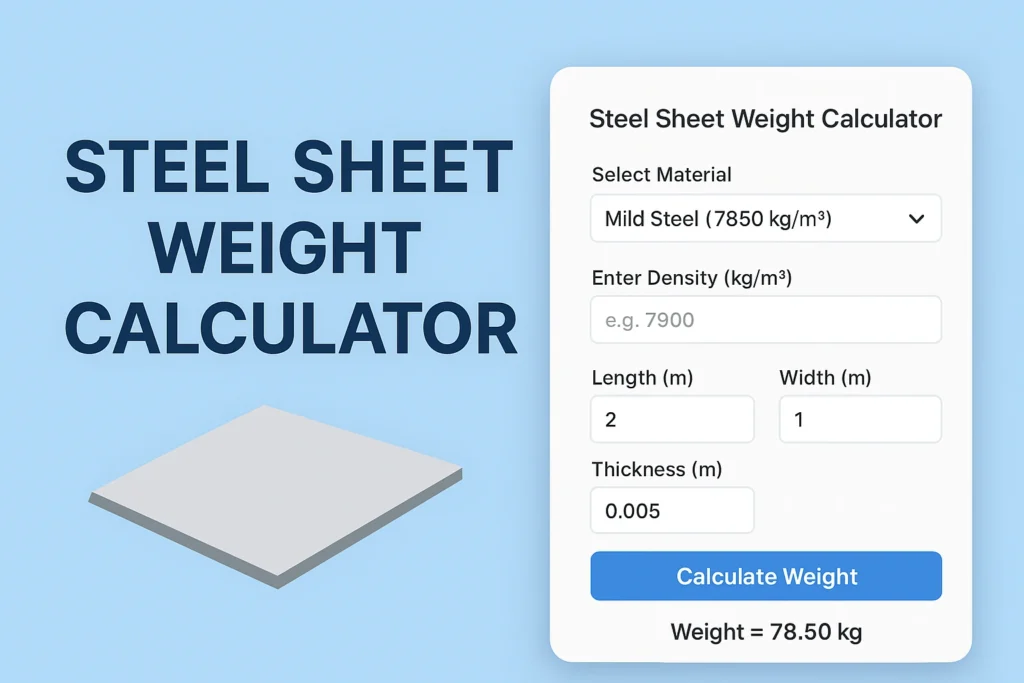
Free sheet weight calculator

Sheet Weight Calculator

Result will appear here

Sheet Weight Calculator: Essential Guide

Whether you’re an engineer, a contractor, or a DIY enthusiast, knowing the weight of a material sheet is crucial for logistics, costing, and structural planning. This guide covers the formulas and densities needed for common materials like steel, aluminum, and plastics.


The Universal Formula

To find the weight of any flat sheet, you need four pieces of information: Length, Width, Thickness, and the Density of the material.

sheet weight calculator formula

Standard Material Densities

Density is the “secret sauce”—it tells you how much a specific volume of a material weighs. Here are the standard values used in industry:

MaterialDensity (kg/m3)Common Uses
Copper8,900Electrical work, heat exchangers
Brass8,500Decorative work, plumbing
Stainless Steel (304)8,000Food equipment, medical tools
Mild Steel (MS)7,850Construction beams, roofing
Titanium4,500Aerospace, high-performance gear
Aluminum2,700Automotive, signage, aircraft
ACP (Composite)~1,750Building facades, signboards
Polycarbonate1,200Skylights, safety glazing
Acrylic (PMMA)1,180Displays, DIY projects

Note on Perforated Sheets: For sheets with holes, you calculate the full weight first and then multiply it by the percentage of remaining material:

Metals & Mining


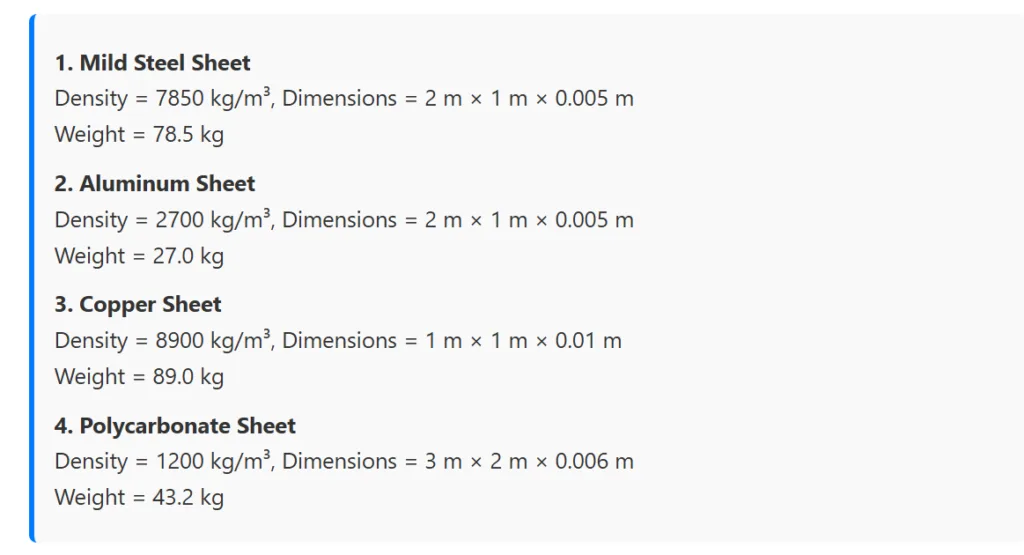
Calculation Examples


Why These Calculations Matter

  1. Cost Planning: Metals are often sold by weight; knowing the weight helps you avoid over-purchasing.
  2. Logistics: Ensures you don’t overload a vehicle or crane during transport.
  3. Structural Integrity: Helps engineers determine if a frame can support the weight of the cladding or panels.
  4. Fabrication: Helps in choosing the right tools for cutting and welding.

How to Use This Calculator

  1. Select the material (steel, aluminum, brass, copper, acrylic, etc.).
  2. Enter sheet dimensions (length, width, thickness) in meters, cm, or mm.
  3. Click “Calculate” – the tool will instantly show weight in kilograms.
  4. For perforated sheets, enter the % open area for adjusted weight.

Why Use a Sheet Weight Calculator?

  • Material estimation – calculate required material
  • Cost planning – avoid over-purchase and reduce expenses
  • Transport logistics – plan safe load capacities
  • Structural strength – ensure stability and safety
  • Fabrication – optimize cutting, welding, and assembly

Applications Across Industries

  • Steel Sheets: beams, roofing, pipelines
  • Aluminum Sheets: aircraft, automotive, signage
  • Brass & Copper: decorative work, heat exchangers, electrical use
  • Titanium: aerospace, high-performance equipment
  • Polycarbonate & Acrylic: glazing, skylights, DIY applications
  • ACP Panels: facades, signboards, cladding
  • Perforated Sheets: ventilation, filters, architectural designs

FAQs (Frequently Asked Questions)

Q1. Can I use this calculator for stainless steel sheets?

Yes. Simply select Stainless Steel from the material dropdown.

Chemistry

Q2. Does the calculator work for galvanized sheets?

Yes. Galvanized steel uses the same density as mild steel (~7850 kg/m³).

Q3. How accurate are the results?

Results are based on standard density values. Actual weight may slightly vary depending on alloy composition.

Q4. Why should I calculate steel sheet weight before purchase?

It helps estimate cost, transportation needs, and ensures proper structural design.

sheet weight calculator

Related Tools

Final Thoughts

Our Steel Sheet Weight Calculator is designed to provide accurate and quick results for engineers, builders, and students. Instead of spending time on manual formulas, use this tool to calculate sheet weight instantly and efficiently.

Calculators & Reference Tools

Try the calculator above, and don’t forget to check out our other steel weight calculators for round bars, pipes, and angles.